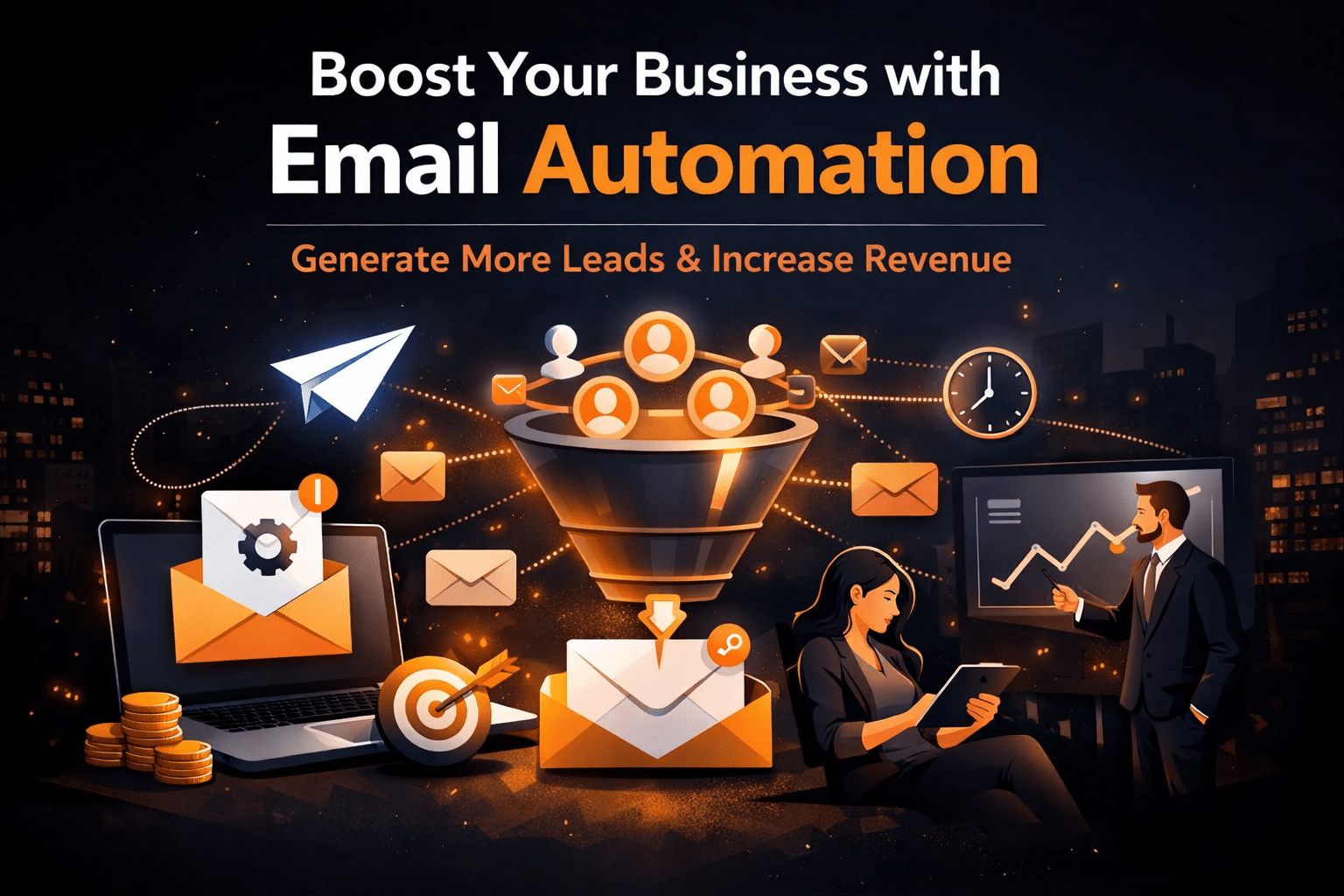
Email Marketing Automation for SMEs

How Email Automation Helps SMEs Generate More Leads, Save Time, and Increase Revenue

Most SMEs are already sending emails. Newsletters, offers, the occasional update.

But the reality is, one off emails only scratch the surface of what email marketing can actually do.

The real value comes from automation.

Automation allows you to send the right message, to the right person, at the right time, without manually chasing every opportunity.

It turns your email marketing into a system that works in the background, consistently generating enquiries and nurturing leads while you focus on running your business.

What Is Email Automation

Email automation is simply a series of pre built emails that are triggered by user behaviour.

For example:

  • Someone fills in a contact form
  • Someone downloads a guide
  • Someone requests a quote or more information
  • Someone hasn’t responded after an enquiry

Instead of leaving that lead to go cold, automation steps in and continues the conversation.

Why Automation Works So Well for SMEs

1. It Responds Instantly

Speed matters.

When someone shows interest in your business, the faster you respond, the more likely they are to convert.

Automation allows you to send a professional, relevant response immediately, even outside of working hours.

2. It Nurtures Leads That Aren’t Ready Yet

Not every prospect is ready to buy straight away.

Automation allows you to stay visible and relevant without being pushy.

You can educate, build trust, and position your business as the obvious choice when they are ready.

3. It Increases Conversions Without Increasing Workload

Instead of manually following up every lead, automation does the heavy lifting.

That means:

  • More follow ups
  • More touchpoints
  • More opportunities to convert

All without adding to your workload.

4. It Creates a Consistent Customer Journey

Most SMEs have gaps in their process.

Enquiries come in, but follow ups are inconsistent.

Leads are interested, but nothing guides them to the next step.

Automation fixes that.

It ensures every prospect receives a structured journey designed to move them towards taking action.

Real World Examples of Email Automation

Here are a few simple automations that can make an immediate impact:

Welcome / Enquiry Follow Up
A sequence that introduces your business, reinforces your value, and encourages the next step

Lead Nurture Series
A short series of emails that educates prospects and builds trust over time

Abandoned Enquiry Follow Up
If someone doesn’t respond, automation gently brings them back

Post Service Follow Up
Encourage reviews, referrals, and repeat business

Re Engagement Campaigns
Reconnect with old contacts who never converted

What This Means for Your Business

When done properly, email automation becomes one of the highest ROI activities in your marketing.

It helps you:

  • Generate more enquiries from existing traffic
  • Convert more of the leads you already have
  • Build stronger relationships with prospects
  • Save time on manual follow ups
  • Create a more predictable pipeline of work

Why Most SMEs Don’t Have This in Place

In most cases, it comes down to:

  • Not knowing where to start
  • Not having the time to set it up
  • Not having the right strategy behind it

That is where working with someone experienced makes a big difference.

How I Help SMEs Build Email Automation That Actually Works

At Black Cat Marketing Solutions, I don’t just set up emails.

I build complete automation journeys designed to generate leads and drive conversions.

That includes:

  • Mapping your customer journey
  • Identifying missed opportunities
  • Writing high converting email sequences
  • Setting up automation within your platform
  • Testing and refining performance

The goal is simple, turn your email marketing into a reliable source of revenue.

Ready to See What This Could Look Like for Your Business

If you’re currently relying on one off emails or inconsistent follow ups, there’s a huge opportunity to improve results quickly.

I’m happy to take a look at your current setup and show you where automation could make the biggest impact.

No pressure, just a practical conversation about what’s possible.

Get in touch today for an informal chat about where automation could help you.
10 Common Google Ads Mistakes That Are Draining Your Budget

10 Common Google Ads Mistakes That Are Draining Your Budget – Black Cat Marketing Solutions

Google Ads can be one of the most powerful lead generation platforms available to small and medium sized businesses. When managed correctly, it delivers targeted traffic, measurable return on investment and predictable growth.

When managed poorly, it quietly drains your marketing budget.

As a Google Ads consultant working with SMEs across Lancashire and the North West, I regularly review accounts where businesses are spending significant monthly budgets without clarity on performance, profitability or lead quality.

The reality is that most wasted spend is not caused by complex algorithm updates. It is caused by simple structural mistakes.

Here are the ten most common Google Ads mistakes I see, and how to fix them.

1. No Proper Conversion Tracking

If you are not tracking conversions correctly inside Google Ads and Google Analytics 4, you are guessing.

Clicks do not equal enquiries. Traffic does not equal revenue.

Without accurate tracking of form submissions, phone calls and key actions, you cannot calculate cost per lead or cost per sale. I often audit accounts that are optimising for page views instead of real enquiries.

A professionally structured account ensures:

  • Clear tracking setup
  • Call tracking integration
  • CRM integration
    Revenue attribution

Without this foundation, optimisation is impossible.

2. Overuse of Broad Match Keywords

Broad match keywords can be powerful, but unmanaged they waste budget quickly.

If you bid on commercial refrigeration repair, Google may show your ad for how to repair fridge at home.

That is not a buyer.

A strategic approach uses:

  • Exact match for high intent searches
  • Phrase match for controlled reach
  • Regular review of search term reports
  • Ongoing negative keyword additions

If search terms are not reviewed weekly, irrelevant clicks accumulate.

3. No Negative Keyword Strategy

Negative keywords prevent your ads from showing for irrelevant searches such as jobs, free, DIY or areas you do not serve.

This is one of the simplest performance improvements available.

Many accounts either have no negative list or have not updated it in months.

Budget leakage often happens quietly through this oversight.

4. Sending Paid Traffic to a Generic Homepage

Paid traffic should land on a focused, conversion driven page that matches the user intent.

When someone searches for a specific service and lands on a cluttered homepage, friction increases and conversions decrease.

High performing campaigns use landing pages that:

  • Match the keyword intent
  • Reinforce the advert message
  • Remove distractions
  • Provide a clear call to action
  • Load quickly on mobile

Google rewards relevant landing pages with higher Quality Scores and lower cost per click.

5. Poor Campaign Structure

Account structure matters more than most businesses realise.

Common issues include:

  • Too many services in one campaign
  • Too many keywords in one ad group
  • No separation between brand and non brand
  • No geographic segmentation

This results in generic ad copy and low relevance.

A clean structure improves click through rate, increases Quality Score and reduces cost.

6. Ignoring Quality Score

Quality Score directly impacts how much you pay per click.

It is influenced by ad relevance, expected click through rate and landing page experience.

If your Quality Score is low, you pay more than competitors for the same traffic.

Improving relevance is often more cost effective than increasing budget.

7. No Integration with CRM or Sales Process

Google Ads should not operate in isolation.

If leads are not:

  • Entered into a CRM
  • Followed up quickly
  • Measured against revenue
  • Categorised by quality

Then you are optimising based on incomplete data.

As part of a wider marketing system, paid ads should connect directly to sales tracking and reporting. This is where many agencies fall short.

8. Poor Use of Automated Bidding

Automated bidding strategies require clean data and realistic targets.

If there is not enough conversion data, automation cannot optimise effectively.

Many businesses switch on automated bidding and assume performance will improve automatically.

Strategy still matters.

9. No Ongoing Testing

High performing accounts continuously test:

  • Headlines
  • Descriptions
  • Calls to action
  • Landing page messaging
  • Device performance

If adverts have not changed in months, performance is likely stagnating.

Testing drives incremental improvements that compound over time.

10. Focusing on Clicks Instead of Profit

The most important metric is not impressions or click through rate.

It is cost per enquiry, cost per sale and return on ad spend.

More traffic does not equal more profit.

Campaigns must be aligned with commercial objectives, not vanity metrics.

Why Integration Matters

Google Ads performs best when connected with:

  • Search engine optimisation
  • Website conversion optimisation
  • Email follow up
  • CRM automation
  • Clear sales processes

When these elements work together, cost per lead reduces and lead quality improves.

When they are disconnected, businesses assume Google Ads does not work.

In reality, the system is incomplete.

How Black Cat Marketing Solutions Delivers Better Results

At Black Cat Marketing Solutions, campaigns are built around:

  • Clear commercial goals
  • Structured keyword segmentation
  • Conversion focused landing pages
  • CRM integration
  • Transparent reporting
  • Ongoing optimisation

Rather than simply running adverts, we build an integrated system that turns traffic into revenue.

Often, improvements do not require a larger budget. They require better strategy and tighter integration.

If you are unsure whether your Google Ads account is structured correctly, an independent review can quickly highlight opportunities for improvement.

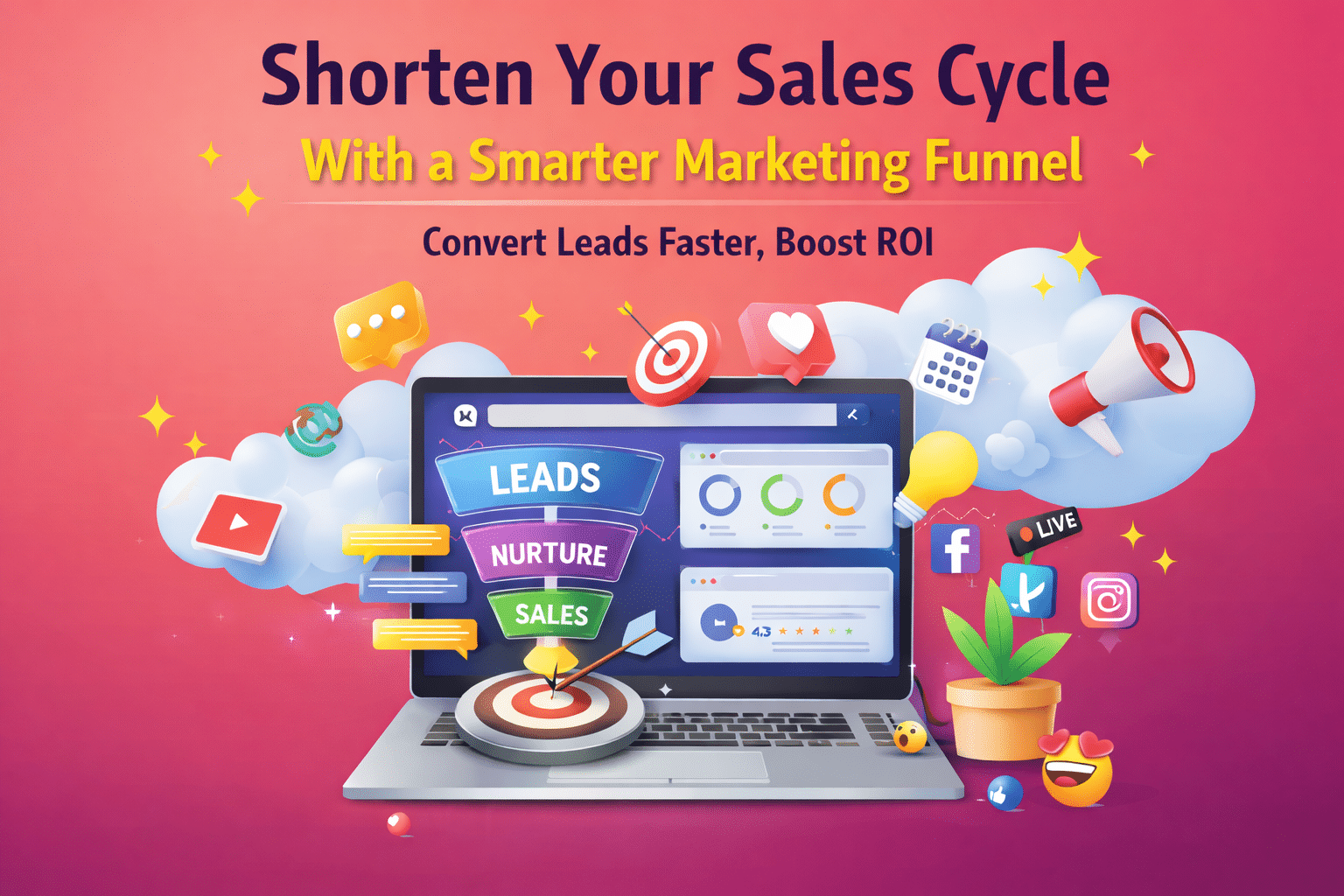
How SMEs Can Reduce Conversion Time With Sales-Led Marketing Funnels

How SMEs Can Reduce Conversion Time With Sales-Led Marketing Funnels

Last month I spoke about the changing nature of SEO, this month I would like to focus on another, oft ignored aspect of Marketing. The marketing and sales funnel. Yes, I believe that marketing and sales need to work together and often the responsibilities overlap.

February may be the shortest month of the year, but it highlights a challenge SMEs face all year round: how to convert interest into revenue faster. With fewer working days, limited budgets and increasing competition, businesses can’t afford slow, disconnected marketing efforts. What’s needed instead is a dedicated, optimised marketing funnel that actively supports sales, powered by AI and integrated across channels.

I am a bit of a geek and love a good funnel, and this has enabled me to help numerous SMEs reduce time-to-conversion by aligning marketing activity directly with sales outcomes, ensuring that every enquiry is nurtured, tracked and progressed efficiently.

From Leads to Revenue: Why Speed Matters

Generating leads is only half the battle. Too often, SMEs invest in marketing that drives traffic but fails to move prospects toward a sale quickly enough. Leads go cold, follow-ups are delayed, and opportunities are missed.

A well-designed funnel removes friction by:

  • Delivering the right message at the right time
  • Supporting sales teams with better-qualified leads and content to b e used in conversations.
  • Reducing manual chasing through automation
  • Giving full visibility of where each prospect sits in the journey

The result is shorter sales cycles, higher close rates and better ROI from marketing spend.

  1. Designing a Funnel That Sales and Marketing Share

An effective funnel isn’t owned by marketing alone. It’s a shared system where marketing attracts and nurtures demand, while sales converts.

A typical high-performing funnel includes:

  • Awareness: SEO, paid ads and content attract prospects actively searching for solutions.
  • Engagement: Landing pages, lead magnets and email campaigns qualify intent and capture data.
  • Nurture: Automated email sequences, remarketing and CRM workflows warm leads based on behaviour.
  • Conversion: Clear CTAs, fast follow-ups and sales outreach turn interest into action.
  • Post-sale: Ongoing communication supports retention, upsell and referrals.

When both teams work from the same funnel and data, prospects move forward faster, without duplication or drop-off.

  1. Using AI to Prioritise and Accelerate Sales Activity

AI can now play a crucial role in shortening conversion times by helping SMEs focus effort where it matters most.

Used correctly, AI can:

  • Score and prioritise leads based on engagement and intent
  • Trigger automated follow-ups when prospects show buying signals
  • Personalise messaging across email and ads
  • Identify where prospects are stalling in the funnel

Instead of sales chasing every enquiry equally, AI and a well-built CRM with segmentation can highlight which leads are sales-ready now, allowing faster, more confident and focused conversations to occur.

  1. Integrated Channels Create Momentum

Speed comes from consistency. When marketing channels operate in silos, prospects receive mixed messages or lose interest altogether. Integrated marketing ensures that every touchpoint reinforces the sales journey.

Key integrations include:

  • Website + CRM for instant lead capture and tracking
  • Email automation aligned with sales stages
  • Paid ads and remarketing that reflect real user behaviour
  • Reporting dashboards shared between sales and marketing

This joined-up approach keeps prospects engaged and informed, reducing hesitation and decision time.

  1. Real-Time Measurement That Improves Results

To keep conversions moving, SMEs must measure what matters, not just clicks and impressions, but pipeline impact.

Important metrics include:

  • Lead-to-opportunity conversion rate
  • Time from enquiry to first sales contact
  • Sales cycle length
  • Cost per lead vs cost per sale
  • Funnel drop-off points

With clear reporting and regular optimisation, small improvements quickly turn into significant revenue gains.

My Final Thought

While February reminds us that time is limited, the reality is that every month benefits from faster, smarter conversion paths. By building a sales-aligned marketing funnel, supported by AI and integrated channels, SMEs can reduce wasted effort, close deals sooner and maximise return from every lead.

If your marketing isn’t actively helping sales close more business, it’s time to rethink the funnel. Here, at Black Cat Marketing Solutions, we specialise in building practical, revenue-focused funnels that help SMEs turn interest into income, faster.

The above does not need to be costly, you do not need to implement HubSpot or Salesforce as other free CRM systems are available. As mentioned, just a few improvements to your marketing and sales process can have significant revenue impact.

Feel free to get in touch to talk about how we can help you improve your conversion time and generate more revenue.